Road signs are not just roadside elements; they are crucial participants in traffic, ensuring safety and comfort on the road. Knowing and correctly understanding road signs is a vital skill for every driver and pedestrian. All road signs can be divided according to two main criteria: the type of action and the color.
Learn their differences, and you will be able to navigate the road easily!
1. There are seven categories of road signs based on the type of action:
| № | Group of signs | Purpose | Examples |
| 1 | Warning signs |    | Inform about approaching a dangerous section of the road. Appropriate measures must be taken according to the situation |
| 2 | Priority signs | 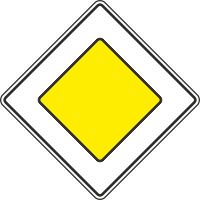  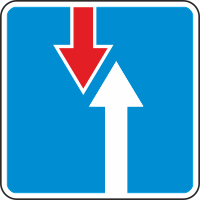 | Indicate the order of passage at intersections, road crossings, and narrow sections of the road |
| 3 | Prohibition signs | 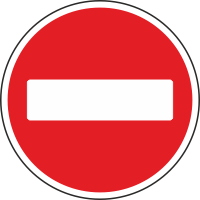  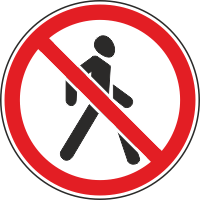 | Introduce or remove traffic restrictions |
| 4 | Mandatory signs | 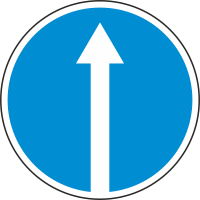   | Prescribe mandatory actions |
| 5 | Information and instruction signs |    | Provide information about the location of objects, as well as established or recommended traffic regulations |
| 6 | Service signs | 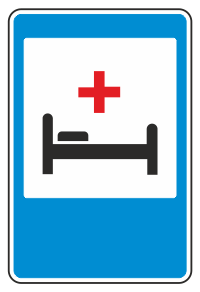 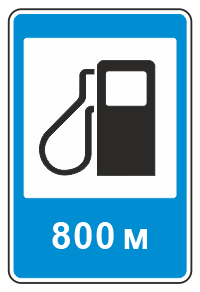 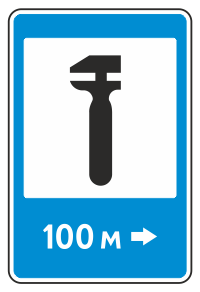 | Indicate service facilities |
| 7 | Signs of additional information (plates) |    | Clarify or limit the effect of the signs with which they are used |
2. Six main colors are used on road signs:
| № | Цвет | Designation |
| 1 |  | Red. This color is used for warning and prohibitory signs. For example, the well-known “No Entry” sign, which prohibits entry onto the road or area beyond the sign. |
| 2 |  | White. In most cases, white road signs (with black text or symbols) are additional signs used to clarify the main signs. |
| 3 |  | Blue. This color is used for mandatory or informational signs. They mainly indicate how to move on the roadway. |
| 4 |  | Yellow. Temporary signs. They most often indicate temporary speed limits or detours. Typically used during roadworks, these signs take priority over regular signs. |
| 5 |  | Green. These signs are installed on highways and roads with a speed limit of 110 km/h or higher. |
| 6 |  | Brown. These signs serve as indicators for museums, parks, nature reserves, and sports facilities. They do not regulate traffic and are mainly intended for tourists. |
3. A reminder to avoid confusing road signs:
| «No movement without stopping allowed» | 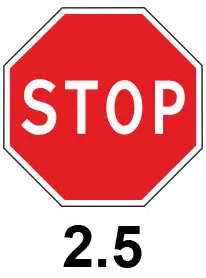  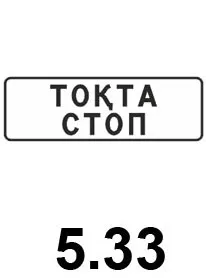 | «Stop line» |
| «No entry» It shall be prohibited to enter all vehicles in this direction. | 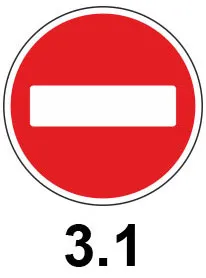 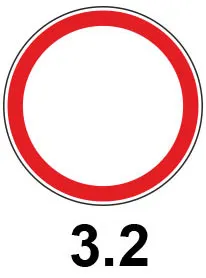 | «No vehicles» All vehicles are prohibited. (No road ahead) |
| «No stopping» Stopping is prohibited in all situations. | 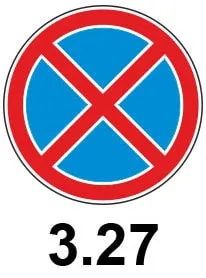 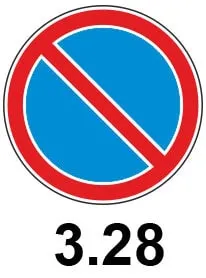 | «No parking» Stopping is allowed for up to 5 minutes, or without time limit, for passenger boarding/alighting or cargo loading/unloading. |
| «Maximum speed» | 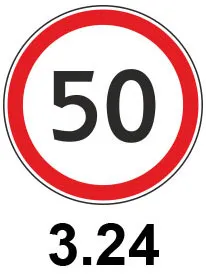 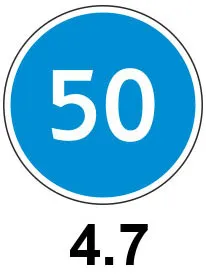 | «Minimum speed limit» |
| «Ahead only» | 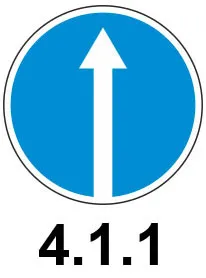 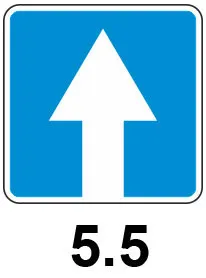 | «One-way traffic» |
| «Give priority to vehicles from opposite direction» | 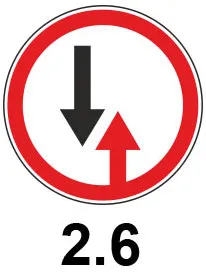 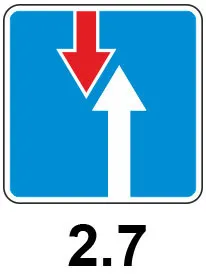 | «Traffic has priority over oncoming vehicles» |
| «Pedestrian crossing» | 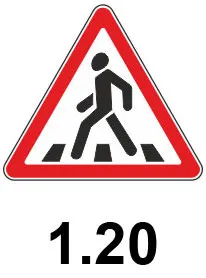 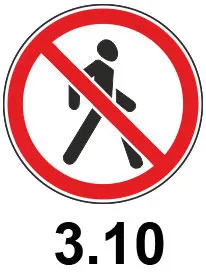 | «Pedestrian traffic is prohibited» |
| «Intersection with the tram line» | 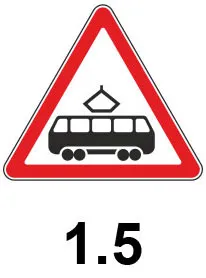 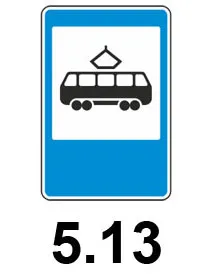 | «Tram stop place» |
| To bypass an obstacle on the right side Used together with sign 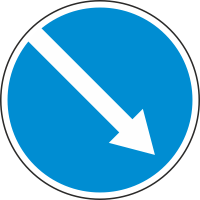 4.2.1 4.2.1(Oblique lines are drawn from top to bottom, left to right) | 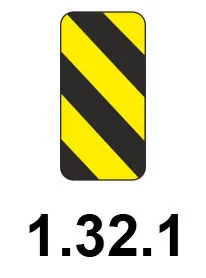 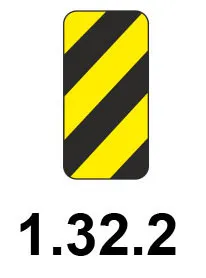 | To bypass an obstacle on the left side Used together with sign 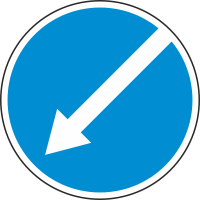 4.2.2 4.2.2(Oblique lines are drawn from top to bottom, right to left) |
Advertisement